
HTU and Partners Launch BAOMAP Project
Story: Mohammed A. Abu
Baobab is critical to the socio-economic development of Ghana and therefore stock taking of it and to understand its spread in the country is important.
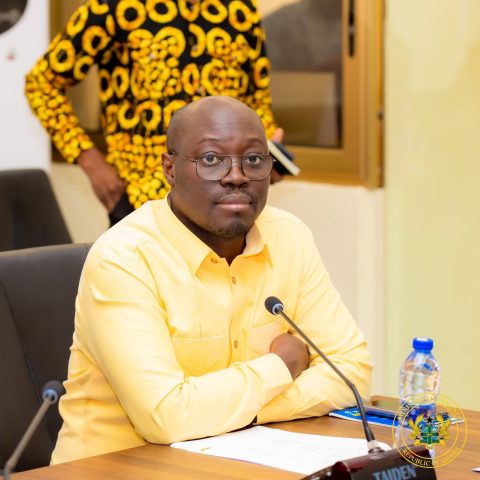
This observation was made by Prof Kenneth Fafa Egbadzor, Head of the Directorate of Research and Innovation, Ho Technical University, Volta Region, in his opening remarks during a hybrid webinar to officially launch the BAOMAP Project (Mapping of Baobab Populations (Adansonia digitata) in Ghana Using Remote Sensing and Ground Verification Surveys), in Ho, last Monday.
Prof Egbadzor, also the Lead for Ghana for the project, appreciated the Rhine-Waal University of Applied Sciences, Germany for funding and all the project partners whose collective support helped make the event a success.
The event drew; Prof. Dr. Matthias Kleinke and Prof. Dr. Jens Gebauer of Rhine-Waal University of Applied Sciences, representatives the Ministry of Environment, Science and Technology, the Ministry of Food and Agriculture, the Forestry Commission and the Environmental Protection Agency; the CSIR-PGRRI, members of the project team; Togbe wo and kple Mama wo.
Also included were representatives of district assemblies, farmer and community groups; baobab processors, aggregators, exporters and nursery operators, friends of the media among others.
Socio-economic importance
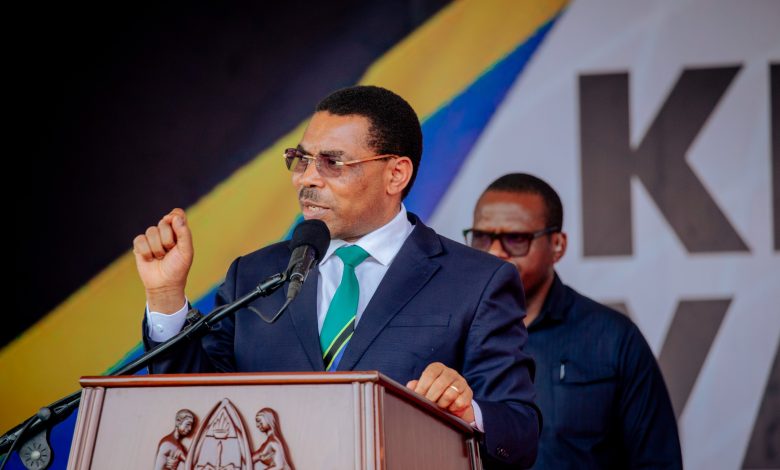
In his Keynote Address, Dr. Daniel Ashie KOTEY, Director, CSIR-Plant Genetic Resources Research Institute, underscored the socio-economic importance of the baobab.
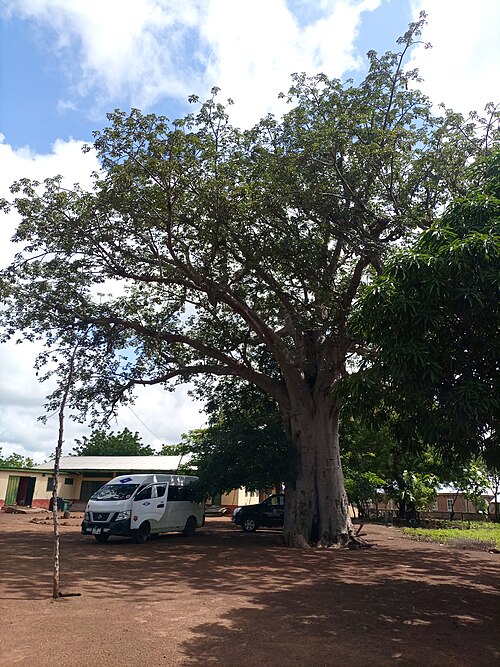
Few trees, he noted, are as familiar to Ghanaians as the baobab. “In many of our rural and semi-rural communities, it is a meeting place, the landmark that gives directions, and the shade under which disputes are settled.
“It is also a source of food and medicine. Its leaves are an essential vegetable for our soups and sauces; its fruit pulp is a key ingredient in refreshing and nutritious drinks; its seeds are processed for food and oil; and its bark is twisted into rope or prepared as medicine.
“Yet, in spite of these many uses and benefits, we have not, as a country, taken deliberate and coordinated steps to adequately document, conserve and utilize our baobab genetic resources” Dr. Kotey noted with concern.
Pragmatic action measures
The HTU Factor
On pragmatic action measures Dr. Kotey alluded to the fact that, in times past, attempts at addressing questions relating to baobab have been limited to efforts by individual institutions.
“Specifically, he said, the Ho Technical University, under the able leadership of Prof. Kenneth Fafa Egbadzor, has been working on baobab since 2018 and has generated groundbreaking knowledge on the species.
The CSIR-PGRRI factor
CSIR-PGRRI, which hosts the National Genebank at Bunso, he disclosed, has since 2024 been working on baobab with the Center for International Forestry Research and World Agroforestry (CIFOR-ICRAF), whose tree genebank is in Nairobi, Kenya. Between them, these efforts have collected baobab germplasm and documented passport data, including the collecting sites and geographic coordinates of populations in different parts of Ghana.
‘However, given that the diversity we have collected largely reflects the populations we could find, either by chance or with the help of traditional knowledge holders in our communities. Such populations may not represent what truly exists in the wild, beyond the confines of farms, households and settlements. Based on the kind of technologies available to us now, it would be a missed opportunity to keep relying on chance encounters and scattered surveys to answer the questions that matter:
“Where are our baobab populations? What is their structure? Where are young trees surviving? Which populations face specific threats, whether from human activity or from natural factors. And what do the people who live among these trees know about them?
“Addressing these questions is urgent, and Ghana’s draft revised National Biodiversity Strategy and Action Plan (NBSAP) for 2025 to 2030 shows why. It estimates that the Guinea Savannah woodland, where the baobab thrives, shrank from 59,342 to 57,906 square kilometers between 2015 and 2021. Over the same period, land cultivated to food crops rose from 18.6 to 20.3 per cent of the country’s land area. Similarly, since 1990, the land area devoted to crops has grown by 303 per cent while that for settlements increased by about 673 per cent.
Concerns
The urgent concern, Dr. Kotey noted, is that baobab trees grow exactly where these changes in land-use pressures bite hardest: on farms, around settlements and across the savannah. Sadly, he intimated, a tree that has lived for centuries can be lost in a day, and a population can be lost without anyone noticing.
These are the blind spots, he pointed out, that BAOMAP is designed to address, by providing baseline spatial data on baobab populations that can be harmonised and validated to support long-term monitoring, genetic diversity assessment, planning and policy, and sustainable use and benefit-sharing.
“BAOMAP is therefore not an isolated scientific project. It is an effort to build a national knowledge base around an important plant genetic resource, and it answers commitments Ghana has already made. National Target 21 of the NBSAP, for instance, calls for biodiversity data that is more available, accessible, reliable and interoperable, including through citizen science and district-level data collection. A credible baobab database can become one practical building block of that national system.
BIOMAP’s Unique Selling Points
“Mr. Chairman, a distinguishing feature of BAOMAP is that it combines two perspectives: the view from above and the view from the ground. From above, the project will train a detection model on satellite imagery to identify baobab crowns and produce preliminary distribution maps. On the ground, four field teams will verify what the satellite sees and record at least 10,000 georeferenced trees, with biometric and ecological data on each.
“This information will produce a national geodatabase, population-density maps, regeneration hotspots, threat-risk layers and district summaries. Together, these will form a National Baobab Atlas and an open-access information platform. Along the way, at least 50 professionals will be trained” Dr.Kotei disclosed..
The role of Partnerships
To deliver all this, Dr. Kotey disclosed, a strong partnership has been deliberately forged. The Ho Technical University will lead the work in Ghana. The Rhine-Waal University of Applied Sciences which led the mobilization of funds from the Ministry of Culture and Science of the German state of North Rhine-Westphalia will coordinate the project with remote sensing expertise, training and validation. The CSIR-PGRRI on the other hand will leverage its national mandate and experience in the collecting, characterization, documentation and conservation of plant genetic resources.
The traditional knowledge factor
“Mr. Chairman, the efforts of the partners listed above, he noted, are a means to a broader end which requires that all of society is engaged to generate the required knowledge. Thus, traditional and local government authorities, policymakers, farmers, processors and consumers will all be key to turning the project’s outputs into value. For example, while a satellite can tell us where a tree stands, traditional knowledge holders can tell us how long it has stood there, how the surrounding landscape has changed, whether young trees still grow out and survive, which and how different baobab plant products are used, and which trees carry cultural or historical meaning.
Responsible use of knowledge
“Another aspect of the broader end that the project envisages requires an all-encompassing governance approach that enhances the transparent and responsible use of the knowledge generated to inform policy decisions at all levels of government and planning decisions, particularly, on major changes in land use by local and traditional authorities. Civil society organizations and the private sector must also play their part to ensure that the knowledge is used to identify hotspots for targeted conservation or sustainable use.
Anticipated benefits
All in all, benefits to be derived to be derived from the stated efforts Dr. Kotey said,will be conservation,domestication, commerce, and resilient livelihoods.
Sustainability of project gains
“Mr. Chairman, given the value at stake, permit me to devote a few minutes to instigate the discussion on how to sustain the gains of BAOMAP beyond the life of the project. Under the project agreement, the current phase has funding support for a short period, that is, from July to December 2026.While the activities in the phase will lay a good foundation, they will not by themselves ensure that the national baobab information system outlives the project.
“We must therefore address from the outset, the difficult but important question of how to sustain and deepen the project gains. For instance, who will maintain the database? Who will update and validate? And how will it connect to Ghana’s wider biodiversity information systems?
Appeal to Partners
“To this end Dr, Kotey therefore, to make the following appeal to partners to make the data credible. make the information usable, the system sustainable, respect the people and their knowledge and to connect BAOMAP to the national agenda.
Word to the Private sector and Media
“To the private sector, I say: invest in research, and invest in ways that keep the resource that baobab is, renewable. To the media: tell this story accurately and patiently, because the results will come in stages.
On CSIR-PGRRI’s Part
For our part, Dr. Kotei assured, CSIR-PGRRI commits, to linking this inventory to the National Genebank, so that what we map, we also conserve, and so that use and benefit-sharing can be tracked.
Community participation for shared success
“When we judge BAOMAP’s success, let us not ask only how many trees were mapped. Let us ask whether we built a reliable evidence base, strengthened national capacity, brought communities into the work, and left behind a system that still serves Ghana when the project is history.
Baobab’s uniqueness
“Mr. Chairman, distinguished guests, ladies and gentlemen, some of the baobabs standing in Ghana today were already old when our great-grandparents were children. Earlier generations protected them without maps or satellites. We now have tools they could not have imagined.
“BAOMAP gives us the chance to see this resource not only as individual trees, but as populations; not only as populations, but as landscapes; and not only as landscapes, but as part of a national biological heritage that calls for knowledge, stewardship and responsible use.
“From the tree to the map; from the map to knowledge; and from knowledge to action” Dr. Kotei intimated, adding, “Let it not be said that our generation lost these trees because we never took the trouble to count them. With BAOMAP, we begin that count today”.
“I thank the Ho Technical University, Rhine-Waal University of Applied Sciences, our funders, and every partner and stakeholder present, and I wish this important project every success” Dr. Kotei concluded.